Paul Fenn, Biography Writing, with quill and ink

Biography Writing Services

LIFE IS SHORT. GET IT WRITTEN.

Seizing The Great Stories That Still Walk Among Us

I write commissioned biographies for individuals and families worldwide. The global economy breeds hyper-specialists, many of whose life stories can be described as strikingly similar. The big, expansive, reckless life is in decline. Now is the time to act. That renegade uncle or auntie. The high school buddy who disappeared, only to return decades later the conquering hero. The unapologetically rules-averse businessperson – someone for whom all those around him/her have irresistibly developed a deep loyalty or fascination. Most of us know at least one of such creatures.

Who is Paul Fenn?

I’m a writer who began his career in travel writing, switched to magazine reportage and editorial, then expanded into copywriting in advertising and digital, then to video, TV & film screenwriting and now… biographies. As a copywriter, I’ve long inhabited a strange paradox in which I communicate on behalf of others things they know better than me. So writing biographies came as a natural extension of all that. I bring a life experience that’s international and beyond unique; a Brobdingnagian vocabulary, which I know when and when not to apply; a love of research and historical context; a need to read everything under the sun; and a fierce addiction to daily writing.

Why work with me?

Because given the opportunity, I can demonstrate – through the provision of writing samples, the manner in which I conduct interviews, undertake contextual research and bust my fingertips to bring each page to life – that I’m the right man for the job. Because we live in dangerously homogenizing times where the bohemian one-offs, the “Grey Gardens” eccentrics, the “damn the torpedoes” generation is dying out, and no one’s replacing them. Because too many interesting people leave us with no written record of their exploits, triumphs, and failures, how they changed things and were changed by them. And that is a slow-burning tragedy.

Quotation marks

"Hold Off on Their Inheritance Until They've Read Your Biography. Then Quiz Them."

- Paul Fenn, Toronto Copywriter
Biography

Great Stories Shouldn’t Die With Those Who Lived Them

My biography writing services are designed to preserve remarkable lives before their stories are lost. Let’s say you know someone larger than life. And now they’re getting on in years – or they’re gone. Who will remember them and how? Will all the things they said, did and left behind be remembered in detail or gradually forgotten? Is such a life not worth collating, immortalizing and honoring in print so it can be passed along to future generations? Prefer to preserve the story on film? See my Family Bio-documentaries. For company histories and founder stories, see Business Documentaries.

Vintage typewriter with paper used to illustrate commissioned biography writing
Vintage typewriter
Biography

The thrill-ride of my inaugural commissioned biography

It celebrates a man, my Uncle Jack, who won over and impressed most everyone who crossed paths, or swords, with him. Researching it exposed me to people and events in his life that I’d never heard or thought about, and gave me a depth of knowledge and comfort about my own family’s history. Not all of it was great news, but it did shed light on the kinds of people and thinking that preceded me, us, and delivered the cushy world we ingrates now inhabit!

Biography

History is everything

Writing what would come to be called Eating Life uncovered historical veins I’d have never otherwise mined, even as an avid reader of history. For example, who knew that in 1588, as the beaten Spanish Armada fled home around Scotland and Ireland, storms smashed more than 20 of its ships against the Irish coast? Or that one of its captains, Francisco de Cuéllar, already under a death sentence for disobeying orders, survived a wreck in Sligo and spent months on the run among the Gaelic Irish? Not I. Timbers from those wrecked galleons now prop up the Armada Bar Uncle Jack built in his Ballina hotel, close to where those ships lay for centuries.

Vintage typewriter illustrating family history research
Biography

What You Get

Feather quill pen

A Plan

Detailed plans of execution, with timelines, deadlines, and the ability to periodically view work in progress.

Detailed Consultations

Regarding story, messages, story arcs, writing style, tonality and length of the work

Quality

A well-written, engaging, tightly rendered work.

Scholarship

A religious devotion to brevity, potency, and grammatically correct text.

Promises Kept

On-time delivery of each draft.

Writing Sample: Eating Life

From Eating Life, my biography of Marshall Doran: Merchant Navy officer, hotelier, and owner of two castles.

Two Brothers and a War

I had no conception of what a truly eccentric human being looked like until I met my father’s brother, Uncle Jack, aka Marshall Doran.*

It was the summer of 1969 when I stood before the man. Our family had flown from Canada to the UK to visit him, his wife, Joyce, and son, Paul. I was nine, and my dad, eight years younger than his brother, had by then told me hundreds of stories about Marshall, most of which put him in the storybook realm: Merchant Navy officer, survivor of a U-boat torpedo attack, head of a smuggling ring, collector of medieval arms and armaments, hotelier, owner of one island and two castles – one of which he’d built with his own hands, the other eventually becoming his second hotel.

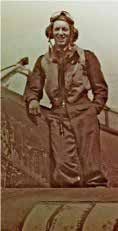
My father, Victor Marshall Fenn, was no slouch in the adventure department himself. He had signed on with the Royal Air Force at 16, having watched the Battle of Britain from his family’s apartment rooftop in London. ‘How could I not be a fighter pilot after seeing that?’ His RAF career saw him, after several failed admissions due to less-than-scintillating mathematics skills, sent to Canada to earn his wings, then into the European fray, flying Spitfires, Mustangs and Hurricanes, among others. After Hitler’s defeat, he was sent to Southeast Asia to strafe and harass the post-war rebels and bandits (still active there). Based in Kuala Lumpur, with the legendary RAF 136 Squadron, he flew ops against the jungle-entrenched Malayan Communist Party cadres and the pirates of Ko Tarutao, Siam (now Thailand), at the top end of the Malacca Strait’s shipping lanes.

Not being much of a note-taker at the time, I have only what my age-depleted memory can summon of that day I finally met Marshall. He was a bear of a man. At six-foot-two, sonorous of voice, barrel of chest and workhorse strong, he was always dressed for hard labour – specifically, the moving, cutting, setting and finishing of large stones and timbers, and the occasional suit of armour.

He wore tattered trousers, boots and a leather vest tied at the waist with a length of cord that served as a belt, or a necktie for more formal occasions. He had an inviting face and spoke in a poetic, almost theatrical manner, using curious and archaic words and phrases that, to my young imagination, sounded like something out of a 1930s pirate film, his voice an unforgettable, commanding baritone that boomed and rolled like the sea that had shaped him.
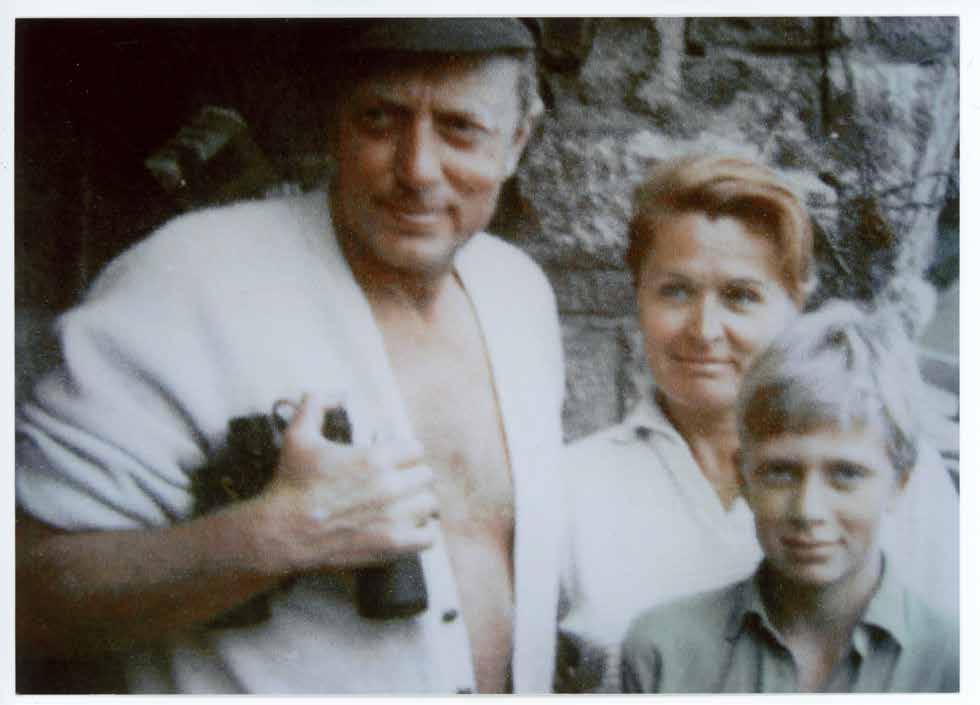
Marshall Doran with his first wife, Joyce, and their son Paul
Marshall with his first wife, Joyce, and their son Paul.
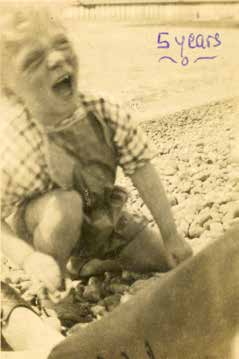
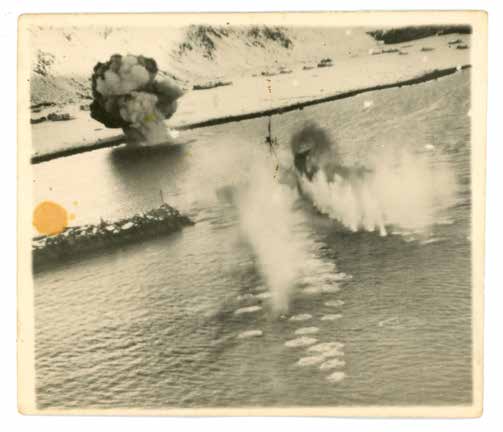
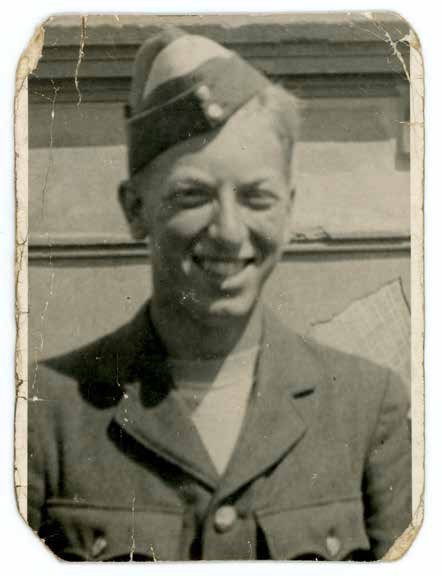
Victor Fenn in RAF uniform and cap, smiling for a portraitVictor Fenn in flying gear on the wing of a Hurricane fighterMarshall as a laughing boy, labelled 5 yearsAerial photograph of a strafing run on shipping
Victor Fenn in his early years with the RAF smiles for a portrait and for a shot on the wing of his Hurricane fighter during training in Canada. Marshall at “5 years” and Nazis getting a proper strafing somewhere in Europe by Victor.

What I came to understand was that Marshall had managed to ingeniously combine all of his consuming passions and fuse them into a life’s work. His prime fixation was collecting old arms, armour, art, furniture, fossils, scrimshaw, chests and safes, always with an emphasis on the medieval, the rugged, the unrefined and the dark.

Second was hunting down and acquiring ancient bits of buildings and chunks of medieval infrastructure – granite wharf bollards, 800-year-old walk-in fireplaces, stone doorways, lintels, beams, elaborate walls and ceilings, immense floor slabs, a range of architectural features and details, some carved into nightmarish faces dating back to the Black Death, plus other assorted historical crumbs. He sought out unusual timbers, many forged by fallen empires – beams, spars, ribs and other pieces, some coaxed from the carcasses of wrecked galleons and freighters found off the Irish coastline. If it could be pulled from the sea, charmed away from a demolition crew, or dug out of a ruin, Marshall was interested.

His third passion was incorporating his collected artefacts into one of three projects: the castle in which he and his family would eventually reside at Flicquet on the northeast coast of Jersey; the Hotel Revere, also in Jersey; and the 10-year-long Belleek Castle hotel renovation in Ballina, on Ireland’s west coast.

Marshall was anomalous in as many ways as there are birds in the sky. He always fought for a bargain, but was not cheap or greedy. He charmed and beguiled all who met him, but preferred to toil alone or with one of many craftsmen who assisted him over the years. He liked boats and fast cars, but would as often as not leave them to rot into oblivion once he’d spent a few weeks with them. He loved to party all night, but did not drink excessively. Though brave, he came across as something of a softy, but in fact was expert at deploying his two strong-willed wives, first Joyce and later Jacqui, to execute any schemes expected to meet resistance from others. He liked to laugh and had an easy time of making others laugh. He was an outsized character who lived dozens of lives. But unlike many, he didn’t live off his stories. He lived in them.

His projects sometimes took decades to conclude, if ‘conclude’ is even the right word. The expression ‘A poem is never finished, only abandoned’ applies perfectly to him. His works were all akin to epic sonnets that were never quite deemed complete, lest a stone block or vaulted ceiling or ancient doorway be slotted in somewhere. A joke circulated among Marshall’s staff that when Nelson Mandela was finally released from 27 years in prison, his first question was, ‘Has Marshall Doran finished Belleek Castle yet?’

I’m not the only one who thinks Marshall’s life was worthy of a book. Since I work as a writer, it seemed natural enough to Marshall’s son, my cousin Paul, to haul my carcass across the Atlantic, mollify me with liquids red, white and gold, and sit me down to write out the story of Marshall Doran. I’m exceedingly glad he did, and hope you are as well.

Paul Marshall Fenn, October 2015

* Marshall Thomas Doran was born Jack Marshall Fenn. His brother (my father), Victor Marshall Fenn, always called him Jack, as did we. Marshall’s name change would come later.
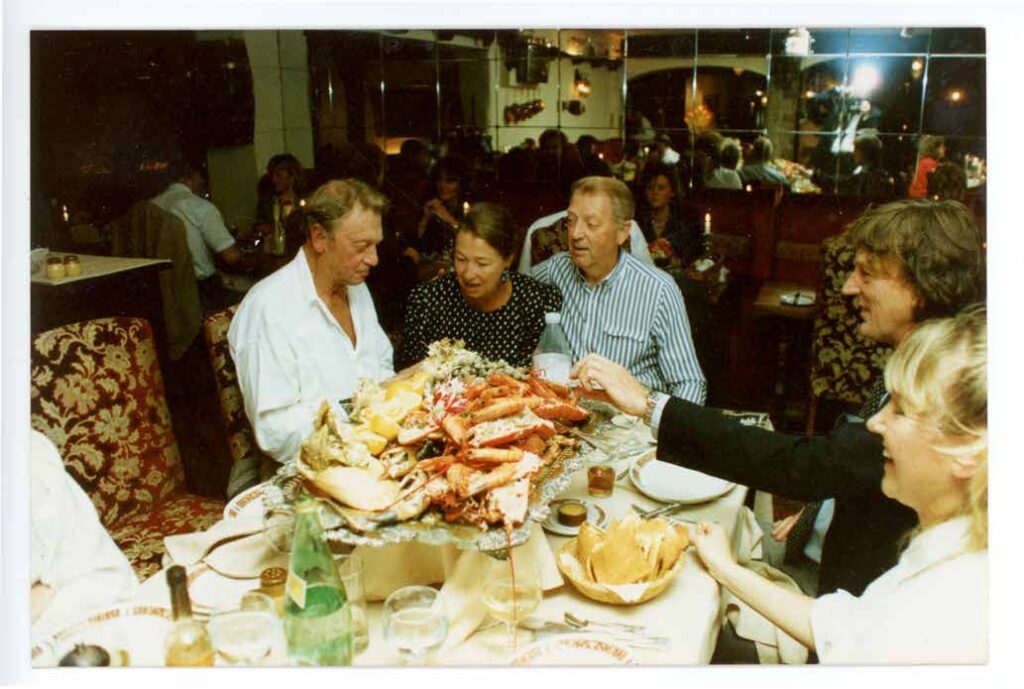
Marshall Doran and family around a lobster platter in the Candlelight Grill at the Hotel Revere
From left to right, Marshall Doran (post-surname change from Fenn), Kay Fenn, Victor Fenn, a family friend and Isabel Doran (Paul Doran’s wife), prepare to devour a lobster platter in the Hotel Revere’s dining room, the Candlelight Grill. The Hotel Revere was Marshall’s first major project.

Writing Sample: Eleven Year Vacation

From Eleven Year Vacation, my travel memoir. Chapter 37: crewing on a worn-out sailboat from Manila to Okinawa, Japan.

Riding the Motherload

On the afternoon wind and engine died simultaneously, Rick went below to fix it and I dived overboard into the China Sea to cool off. Surfacing into a Portuguese man-o-war, I took a fiery lashing all across the back and shoulders. I climbed out of the water in so much pain the endorphins got me stoned. I’d seen a million of these little blue sailors in several seas, but hadn’t been stung till now. I asked Rick what he knew about them. ‘You’ll live,’ he said, before ducking back into his grease kingdom. An accurate assaying. But for a good two hours the pain locked me. This was just as the island of Taiwan came into sight.

The wind instantly picked up, a perfect fifteen knots out of the west. I trimmed sail and set myself down behind the helm, whence I cracked a beer and a smoke. This marked the halfway point of our passage. Rick, his wife and I were the three who made the big tub viable. The others travelled mainly as cargo. I felt glad of it.

As we came up parallel to Taiwan’s southernmost point, the wind viciously snap-shifted to a strengthening northerly, bang on Motherload’s nose. Waves grew as hours flew by, until becoming picket-fence 15-20-footers, rolling one after another in close formation, each of them bow-bashing, patience-testing pains in the ass. The new conditions required us to tack every few hours. And that meant coaxing at least two others to help me. Volunteers didn’t exactly leap on deck. I press-ganged the two Filipino gents, giving them a crash course in sail management. I had not seen Rick since the previous evening, and guessed he was torquing on something important. After half a day of skimming the cream off wavetops with our nose, with the neon Irish green of Taiwan’s coast to our west, our captain came on deck.

‘Oh,’ he said with a sniff. ‘Weather.’

‘Plenty,’ I added.

Then the jib exploded.

We both watched it, mouths in fly-catching stance.

‘Just as well,’ shouted Rick, over the thwacking remains, ‘we’ll need to raise a storm jib in this. Be right back.’

After cleaning up sail scraps and securing the halyard, I re-assumed the helm and watched something forming a few hundred yards off our port bow. It was more valley than peak, but I could sense its power by watching the speed of the foam zoom up its advancing wall. After considering various actions — should I take it from the side, head on, or somewhere in-between? — I decided on the latter option and beeped us westward a few degrees on the Autohelm. The swell preceding the rogue wave showed plenty of tooth of its own, lifting the Motherload as close to vertical as I’d ever want to get in a ship. Her bow then plunged forward in perfect time to take full advantage of the downhill toboggan run that awaited her on the back side.

‘MOTHERFUCKERRRRR!’ I screamed. There was nobody else on deck to share my enthusiasms. Down the chute we went, aiming right for the sea floor, gathering speed, sails flapping in protest. ‘It’s coming over the deck!’

Protruding from the Motherload were two steel poles bolted in an A-frame shape to her forward hull, forming a bowsprit that nosed out about twelve feet. Inside that, a triangular deck had been built using teak two-by-twos in a criss-cross pattern, interspersed with two-inch-square holes to let water pass through.

I heard a muffled fracture just as the front half of the boat met the wave. Motherload shuddered awkwardly a moment, like a rhino slowed but not seriously impeded by a brick wall, while a six-foot lip of ocean ripped along the deck, exploding like heavy gunfire into hatches, cleats, winches, stays and bulkheads, until finally slamming the pilothouse in a spectacular blue-white detonation a few feet in front of my face that rose 20 feet to the spreaders. I braced myself on the wheel while a few hundred pounds of warm China Sea sluiced through me, soaking me, filling my sinuses and testing the canvas roof above me.

I horked out the raunchy brine. Looking forward, I saw that a good portion of the wooden bowsprit had been smashed upward.

‘Oh-oh.’

‘What now?’ Rick had returned with a storm jib.

‘You didn’t feel that?’

‘Yeah, I felt it. What broke?’

‘That.’ I pointed at the kindling up front.

‘Damn, I spent ten thousand pesos getting that fixed in Manila. Thought they got all the rot out.’

‘I don’t think it was rotten. If you’d seen what we just hit…’

We inspected the damage. It looked like a VW Bug-sized fist had punched a hole through the platform from below. ‘Oh boy, better check the nav station,’ Rick said, disappearing inside again, for the day.

The weather raged on. When my watch ended, I went to check our progress on the chart table. Rick had covered the satnav, both radios, weatherfax, radar and chart table with thick sheets of clear plastic. Heavy rain had joined the deluge. Water poured onto the plastic, down to the floor, into the bilge, through the bilge pump and back out to sea.

Rick stood next to me surveying the mess. ‘Rick, just tell me when to start getting nervous about this boat.’

‘Ah, don’t worry. She can handle plenty more than this.’

I quietly doubted him.

I found Linda cooking up a storm of her own in the galley. ‘Ready for dinner?’ she asked.

‘I’m so hungry I could eat a flotilla of jellyfish. It’s been hectic up there today. I take it you don’t suffer from seasickness?’

‘Never,’ she said.

‘Well I guess that makes three of us.’

‘Yup. Hey, could you do me a favour and wake up Joe. He’s been in bed all day and hasn’t eaten. I’m getting worried.’

‘I’ll go rouse the scoundrel.’

‘Be gentle, Paul. He hasn’t been in a very good mood lately.’

‘No kidding.’ I did not relish the assignment. Joe had been about as much fun as a mouthful of toothaches in recent days. Not even angry or snappy any more, he seemed to be losing his spark.

‘Joe,’ I called out softly, shaking him. ‘Wake up, man. Dinner’s on the table.’

‘Fuck off,’ he grumbled.

‘I will, but are you sure? You really ought to eat something, even a little, or your blood sugar’ll get messed up. C’mon, Linda cooked up a fine meal for you.’

‘All right,’ he said with a long groan that seemed to aid his attainment of verticality. ‘But never you mind about my blood sugar. I take care of myself.’

‘Okay. Just following orders.’

It was a gloomy meal with just the two of us, and me doing all the talking. After rearranging his food for ten minutes and me grabbing a second plateful for myself, Joe pushed himself away and shuffled back to bed.

‘Didn’t even thank you,’ I said to Linda. She sat down at the table with a steaming plate of tofu in broth.

‘Joe’s in bad shape,’ she said. ‘And this swell’s not helping. He refuses all our offers for help and now he won’t eat. He’s getting weaker, isn’t he?’

‘I guess,’ I said. ‘Though he wasn’t quite fighting fit when he boarded.’

‘I know, but if his blood sugar… you know… he’ll die.’

Read the whole chapter on Substack →

Customer reviews

What My Clients Say

Related services:  Ghostwriter  ·  Family Documentaries  ·  Speechwriter

Don't Be Shy

Contact

Get a quote, check on availability or just run an idea by me. I’ll usually get back to you within a business day.

General Inquiries​

Paul Fenn
Freelance Writer, Creative Director

(647) 296-6006

Ontario, Canada

Scroll to Top